


Gifting has never been easier
Perfect if you're short on time or are unable to deliver your gift yourself. Enter your message and select when to send it.


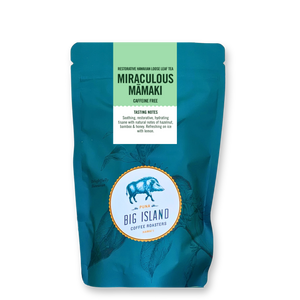
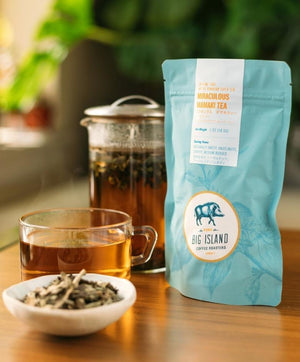
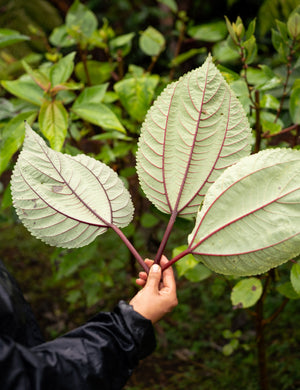
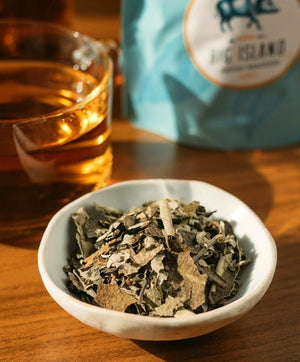
Deep in Hawaiʻi’s lush volcanic forests grows a remarkable plant, long cherished by Native Hawaiians for its traditional medicinal and cultural uses. Known as the healer of the forest, māmaki is a naturally caffeine-free herbal tea, prized for its flavor and restorative character.
Unlike traditional tea, māmaki is an herbal infusion made from the leaves of a plant in the nettle family, native to Hawaiʻi. It brews into a beautiful amber cup, naturally sweet and slightly earthy, with delicate notes of hazelnut, bamboo, and honey. Silky and medium-bodied, it’s a soothing, caffeine-free pleasure to enjoy morning, afternoon, or evening.
Beyond its inviting flavor, māmaki contains naturally occurring antioxidants and polyphenols—plant compounds studied for their potential health benefits. In a 2022 laboratory study, researchers found that certain māmaki tea extracts demonstrated greater antioxidant activity than the green tea samples tested. Although research into its effects on human health is still developing, these findings offer a fascinating scientific perspective on a plant Native Hawaiians have valued for generations.
For generations, māmaki has held a special place in Hawaiian life. Traditionally brewed as an herbal remedy, its leaves were valued for their restorative qualities, while its bark and fibers were used to make kapa, the traditional cloth of Hawaiʻi.
Māmaki also plays an important role in Hawaiʻi’s native ecosystems. Its leaves provide food for the caterpillars of the Kamehameha butterfly, one of Hawaiʻi’s few native butterflies, making this plant an important part of the islands’ forest biodiversity.
Our māmaki is grown without pesticides using regenerative practices at 4,000 feet on the volcanic slopes of Mauna Loa. Cultivated with care for the land, it celebrates the enduring connection between Hawaiʻi’s native plants, wildlife, and cultural traditions.
Hot Māmaki Tea
Add 1–2 tablespoons of loose māmaki leaves to 8–10 oz of boiling water. Steep for approximately 10 minutes, or longer for a fuller-bodied, more syrupy infusion.
Iced Māmaki Tea: Overnight Steep
Crumble ¼ cup of loose māmaki leaves into a quart-sized glass jar or French press. Fill with boiling water and allow to steep overnight. Strain, chill, and enjoy.
A Few Brewing Tips
To learn more, check out our article, All About Mamaki Tea: From Benefits to Brewing.
| Order | Cost & Carrier | Delivery |
|---|---|---|
| ≤$98 | $12.00 via FedEx | 5-8 days* |
| Over $98 | Free FedEx (USPS if PO Box) | 4-7 days* |
| Expedited | $24.95 via FedEx Priority | 4-7 days** |
* Delivery quote excludes weekends/holidays and is based on fulfillment+delivery times. Does not include delays that are caused by carrier or out of our control.
** Upgraded and expedited shipping may be purchased at the time of checkout. ‘Expedited’ prioritizes your shipment in the queue. Delivery quote excludes weekends/holidays and is based on fulfillment+delivery times.
Orders are roasted Sunday-Friday and shipped Monday-Friday. Roast dates are applied to the bags in your order.
*Rural locations may incur additional fees at checkout.
| Hawaii to Canada* | Varies based on Territory |
|---|---|
| Up to 1 lb: | $17.29-$18.58 |
| 2-5 lbs: | $17.35-$25.28 |
| 6-10 lbs: | $21.84-$29.76 |
| 11-15 lbs: | $29.14-$44.21 |
| 16-20 lbs: | $35.76-$48.72 |
| 21-25 lbs: | $42.95-$55.63 |
| 26-30 lbs: | $55.07-$70.03 |
| 31-99 lbs: | $59.63-$125.86 |
| 100+ lbs: | Email for quote |
|
De Minimis for Duty |
De Minimis for VAT |
|---|---|
| $150 CAD | $40 CAD |
|
Hawaii to Germany, United Kingdom* |
|
|---|---|
| Up to 1 lb: | $17.62 |
| 2-5 lbs: | $17.64-$25.22 |
| 6-10 lbs: | $25.67-$29.08 |
| 11-15 lbs: | $41.44-$50.04 |
| 16-20 lbs: | $53.98-$58.28 |
| 21-25 lbs: | $61.46-$62.84 |
| 26-30 lbs: | $83.21-$88.46 |
| 31-99 lbs: | $90.07-$165.31 |
| 100+ lbs: | Email for quote |
| De Minimis for Duty | De Minimis for VAT |
|---|---|
| 150 EUR | 22 EUR |
| 135 GBP | 15 GBP |
|
Hawaii to Japan, South Korea* |
|
|---|---|
| Up to 1 lb: | $17.64 |
| 2-5 lbs: | $20.93-$31.81 |
| 6-10 lbs: | $34.32-$41.56 |
| 11-15 lbs: | $43.99-$53.74 |
| 16-20 lbs: | $53.84-$61.03 |
| 21-25 lbs: | $63.48-$67.64 |
| 26-30 lbs: | $75.35-$92.33 |
| 31-99 lbs: | $94.17-$189.94 |
| 100+ lbs: | Email for quote |
| De Minimis for Duty | De Minimis for VAT |
|---|---|
| 10,000 JPY | 200,999 JPY |
| 150,000 KRW** | 150,000 KRW |
| ** price of goods+shipping cost+insurance | |
| Hawaii to Australia* *Rural locations may incur additional costs at checkout |
|
|---|---|
| Up to 1 lb: | $20.70 |
| 2-5 lbs: | $22.16-$30.40 |
| 6-10 lbs: | $29.33-$36.40 |
| 11-15 lbs: | $55.54-$72.31 |
| 16-20 lbs: | $76.98-$85.37 |
| 21-25 lbs: | $91.27-$93.29 |
| 26-30 lbs: | $122.59-$126.73 |
| 31-99 lbs: | $126.77-$245.34 |
| 100+ lbs: | Email for quote |
| De Minimis for Duty | De Minimis for VAT |
|---|---|
| 1000 AUD | None |
* Please note that customs and duties are displayed at checkout. All costs listed are estimates.
Because Espresso Bites are made without stabilizers or preservatives, they may bloom or melt when shipping temperatures exceed 80 F. If this is a concern in your location please select FedEx shipping.
If you notice a white color to your bar, it's perfectly safe to eat. This happens when the cocoa butter softens and migrates to the surface. It happens more often when shipping in warm weather. Learn more about blooming.
Espresso Bites that melt or bloom when shipped via FedEx are eligible for a full refund or credit.
Espresso Bites that melt or bloom when the buyer elects Free Shipping or standard USPS are eligible for a credit.
If your order is incorrect or damaged in any way, please email us at hello@jfjzuw.com with your order number within 7 days of receiving your order.
For our Refunds & Returns Policy, please see here.